On the evening of May 2, 1889, fifteen men climbed an outside wooden staircase to a second-floor room in Richard Green’s Palace Hotel in the mining town of Cerrillos. Miners, merchants, and railroad men; a judge, a minister, and a hotel owner—Masons from across four states, they met under special dispensation. Within a year, the New Mexico Grand Lodge granted a charter, and Cerrillos Lodge No. 19 was dedicated on February 7, 1890, by Grand Master Frederick H. Kent. Woven into the chaotic life of a boomtown that had surged to over a thousand residents, twenty saloons, and two newspapers, turquoise and coal mining soon slowed. By 1904, the village of Cerrillos disincorporated entirely, yet the Lodge endured, meeting first in the Palace Hotel and later in a sturdy stone building on Main Street—the former Clear Light Opera House—purchased for just $305.
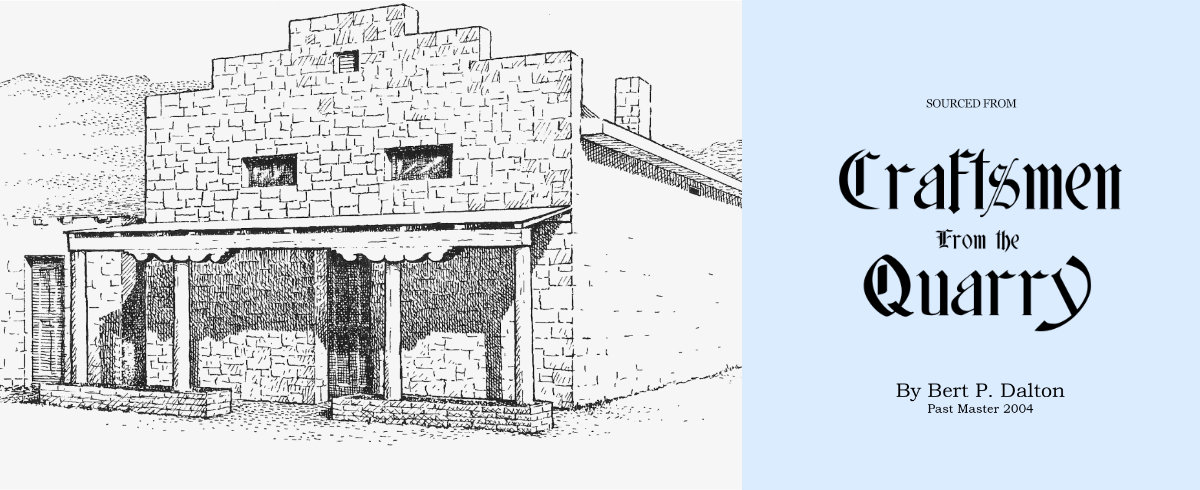
That stone building served as the Lodge’s home for nearly half a century, and its charm was famously rustic. Three kerosene lanterns hung from the ceiling, and a coal stove had a persistent habit of spewing ash and flame into the room. There was no plumbing, and on clear nights, the moon was visible through cracks in the wooden walls. Indeed, meetings were traditionally scheduled around the full moon so that members could navigate the dark desert trails back home safely. It was the last Lodge in New Mexico to install electricity, finally yielding in 1948. Despite these frontier conditions, the membership reflected the wide world passing through. Its roster included men from twenty states and ten countries, including charter member Richard Green, whose son became the first man “raised” in the Lodge after serving as Teddy Roosevelt’s orderly in the charge up San Juan Hill. Other notable figures walked those floorboards, from Albert Jennings Fountain—a soldier and Territorial legislator whose 1896 disappearance remains New Mexico’s greatest unsolved mystery—to Austin Kendall, who had witnessed the Civil War’s historic battle between the ironclads Monitor and Merrimack.
By the early 1950s, the Lodge faced a serious crossroads. Attendance had dwindled to a handful of brothers, and the Grand Lodge recommended that the charter be revoked. In a meeting on September 3, 1952, that lasted exactly one hour, the brethren voted unanimously to preserve their heritage by moving to Santa Fe. This move brought immediate renewal. Welcomed by Montezuma Lodge No. 1, Cerrillos began a uniquely warm and lasting fraternal partnership that continues to this day. After a decade on the Santa Fe Plaza, the Lodge moved in 1962 to its current home on Paseo de Peralta, adjacent to the Scottish Rite Temple. The ensuing decades brought further refinement to the Lodge’s identity, including the 1980s installation of the traditional black-and-white mosaic pavement, which remains a centerpiece of the Lodge room floor today.
Fifty-two years to the day after the brethren had departed the mining district, they returned. On October 29, 2004, twenty Masons gathered once again in the old stone building on Main Street to open Lodge and confer an Entered Apprentice degree within its original walls. In 2017, Cerrillos Lodge No. 19 became a Traditional Observance lodge, recommitting the brethren to the highest standards of ritual excellence, contemplative solemnity, and deep esoteric study. This transition solidified the Lodge’s reputation as a sanctuary for those seeking a more profound and philosophic Masonic experience.
Download Craftsmen From The Quarry (48mb PDF)